Introduction
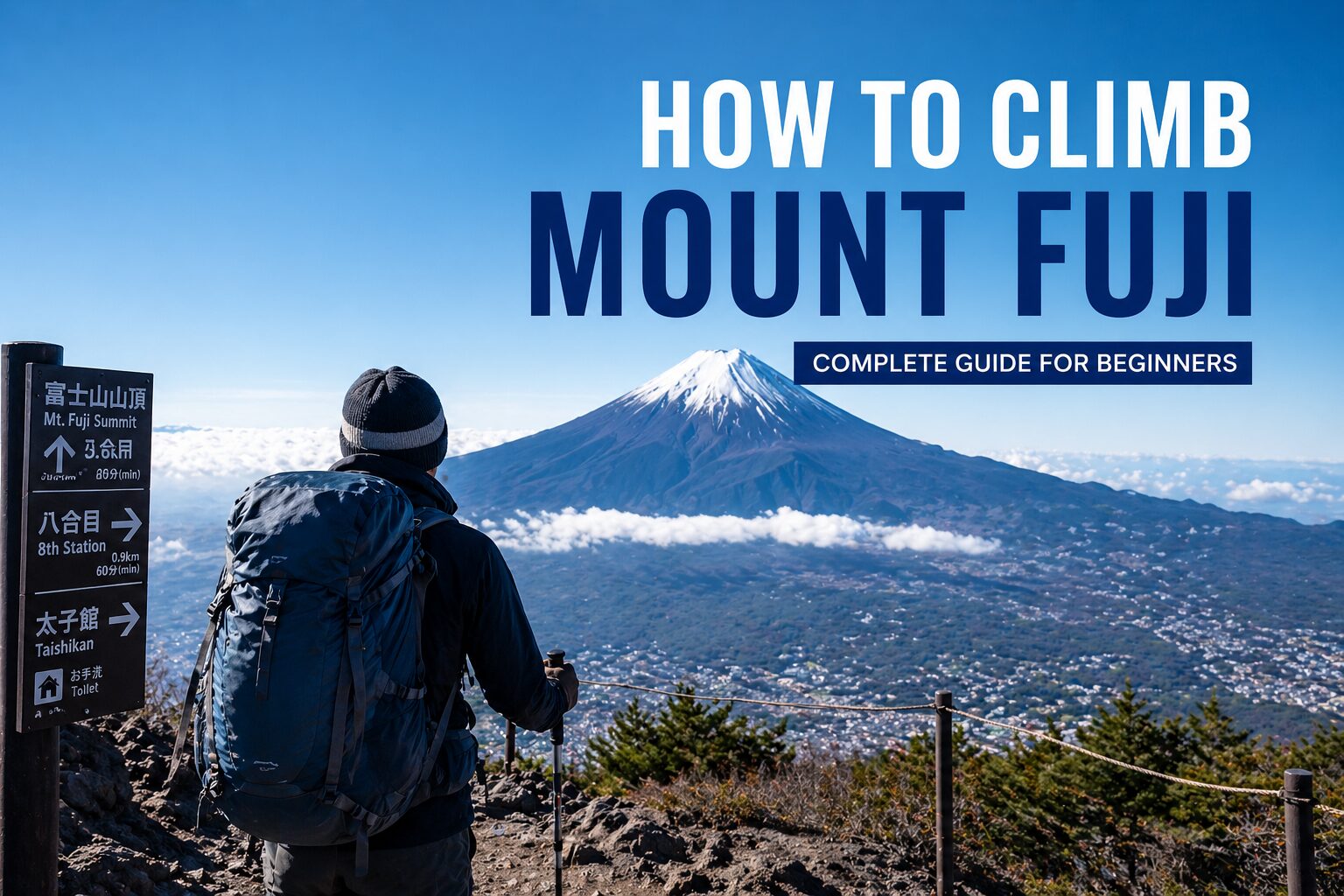
Mount Fuji is Japan’s highest mountain and one of the country’s most iconic landmarks.
Every year, thousands of travelers challenge themselves to reach the summit.
Although climbing Mount Fuji is possible for beginners, good preparation is essential for a safe and enjoyable experience.
In this guide, you’ll learn the best climbing routes, costs, gear recommendations, and important safety tips for first-time climbers.
Before climbing Mount Fuji, make sure to check the official website for the latest information on trail conditions, weather, climbing fees, and safety regulations.

Basic Information
- Mount Fuji is the highest mountain in Japan, standing at 3,776 meters above sea level.
- Difficulty: Moderate
Even beginners can climb Mount Fuji with proper preparation and pacing. - Climbing Time: 6–10 Hours Round Trip
Most climbers take around 5–7 hours to reach the summit and 3–4 hours to descend.
Best Time to Climb Mount Fuji
The best time to climb Mount Fuji is during the official climbing season, which runs from early July to early September.
During this period, the mountain trails, mountain huts, and public transportation are fully open and considered safe for beginners.
July is generally less crowded, while August is the busiest season due to school holidays and the popular sunrise hikes.
Mount Fuji is officially closed outside the summer climbing season, and climbing during the off-season can be extremely dangerous due to snow, ice, strong winds, and closed facilities.
Mount Fuji Climbing Routes
There are four main climbing trails on Mount Fuji, and each route offers a different experience.
Some trails are better for beginners, while others are more challenging and less crowded. Choosing the right trail is important for a safe and enjoyable climb.
Below is a quick guide to the four official Mount Fuji climbing trails.
For most first-time climbers, the Yoshida Trail is generally considered the best option because of its easy access, many facilities, and beginner-friendly environment.
Yoshida Trail
The Yoshida Trail is the most popular and beginner-friendly route on Mount Fuji.
It has the largest number of mountain huts, restaurants, and rest areas, making it the best choice for first-time climbers.
Because of its popularity, the trail can become very crowded during weekends and the sunrise climbing season.
Fujinomiya Trail
The Fujinomiya Trail is the shortest route to the summit because it starts at the highest elevation.
However, the trail is steeper and rockier than the Yoshida Trail, so it can be more physically demanding.
Subashiri Trail
The Subashiri Trail is known for its beautiful forest scenery and quieter atmosphere.
This route is less crowded than the Yoshida Trail and is a good option for climbers who want a more peaceful experience.
Gotemba Trail
The Gotemba Trail is the longest and most difficult route on Mount Fuji.
It is recommended only for experienced hikers because of the long climbing time and fewer mountain huts.
However, the trail offers wide-open scenery and fewer crowds.
Essential Gear for Climbing Mount Fuji
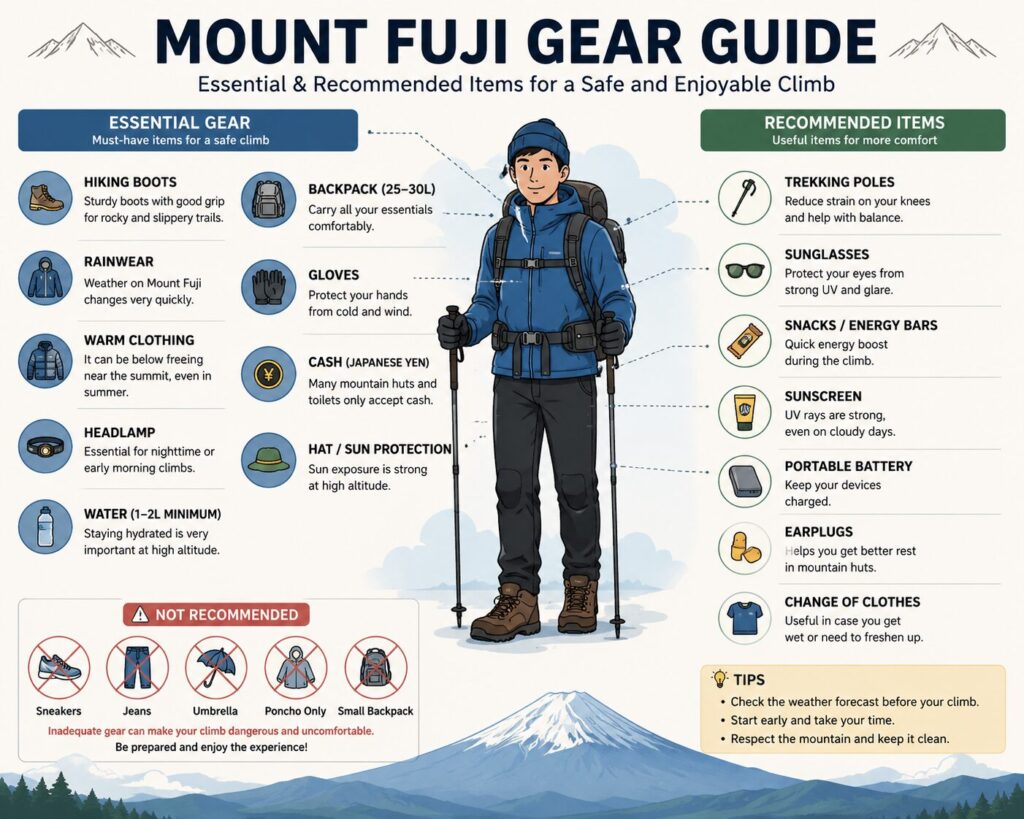
The weather on Mount Fuji can change very quickly, and temperatures near the summit may drop below freezing even in summer.
Make sure to bring the following essential gear for a safe climb.
Essential Items
✅ Hiking boots
✅ Rainwear
✅ Warm clothing
✅ Headlamp
✅ Water
✅ Backpack
✅ Gloves
✅ Cash
Recommended Items
✅ Trekking poles
✅ Sunglasses
✅ Snacks
✅ Sunscreen
✅ Portable battery
Cost of Climbing Mount Fuji
As of 2026, all climbers are required to pay a mandatory Mount Fuji climbing fee of 4,000 yen per person.
The fee helps support trail maintenance, safety management, and measures against overcrowding on the mountain.
Additional costs may include:
- Mountain hut stay: 6,000–12,000 yen
- Transportation: 2,000–5,000 yen
- Food and drinks: 1,000–3,000 yen
Cash is highly recommended because some mountain huts and toilets do not accept credit cards.
Tips & Safety
Mount Fuji may look accessible, but it is still a serious mountain with rapidly changing weather conditions.
Here are some important safety tips for first-time climbers:
- Avoid climbing during the off-season because trails and facilities are closed.
- Watch for signs of altitude sickness, such as headaches or nausea.
- Take regular breaks and stay hydrated during the climb.
- Book mountain huts in advance, especially during weekends and holidays.
- Always check the weather forecast before your climb.
- Bring proper rainwear and warm clothing, even in summer.
Conclusion
Climbing Mount Fuji is one of the most unforgettable experiences in Japan.
With proper preparation, even beginners can safely enjoy the climb and witness the incredible sunrise from the summit.
Take your time, respect the mountain, and enjoy the journey to the top of Japan’s highest peak.
コメント